

Ever wondered how wireless technology really works,
but felt intimidated by the jargon?
You’ve come to the right place!
At Wireless Explained, we turn complicated concepts into understandable and engaging stories, using simple analogies and a fun approach.
Originally launched as a YouTube Channel, our content now lives here offering introductory lessons, so no prior technical background is needed.
Blog
Basic:
-
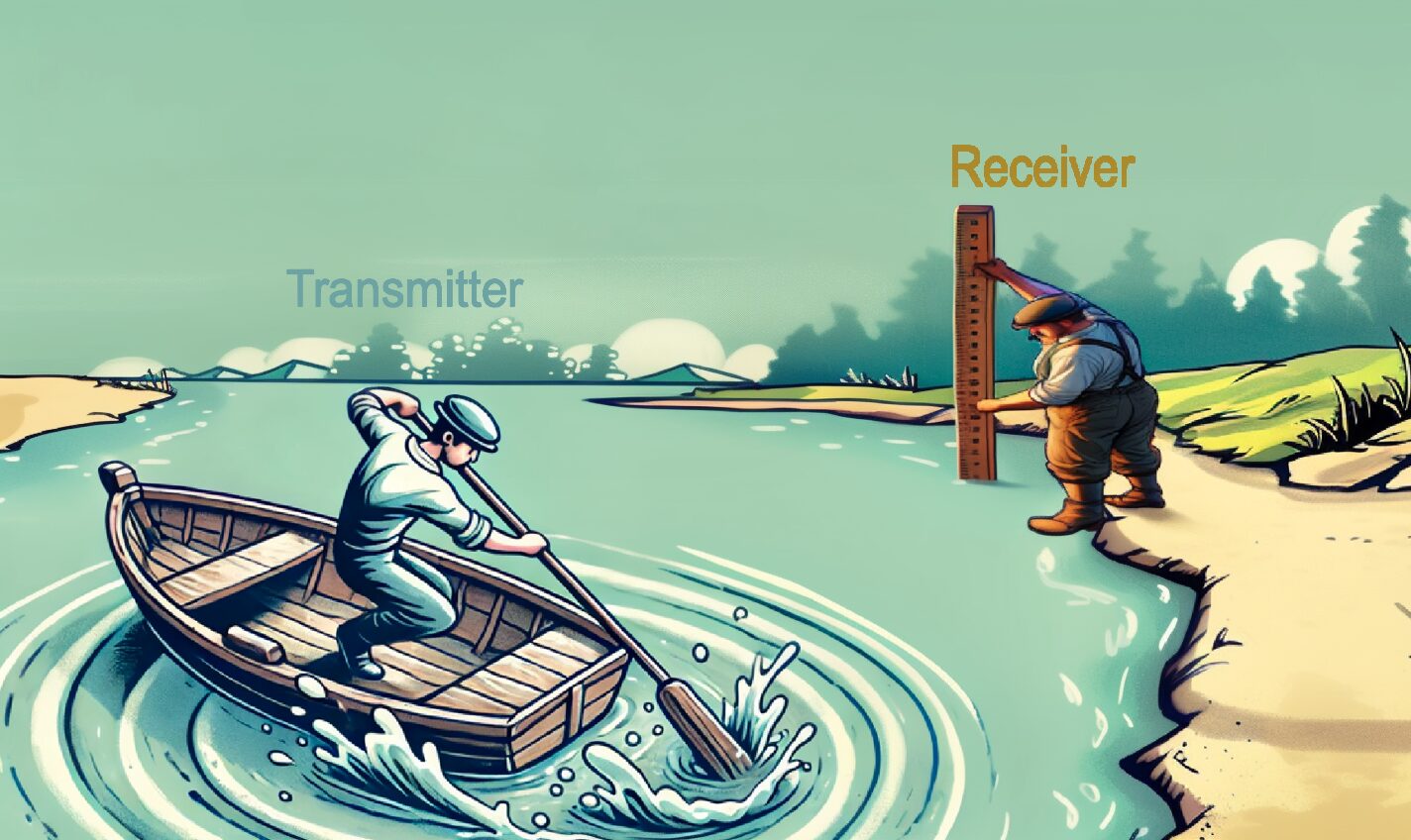
What is Modulation? Wave-Shaping Explained on a Quiet Lake
In this post, I will explain modulation without using technical jargons, but simply using analogy of water waves.
-
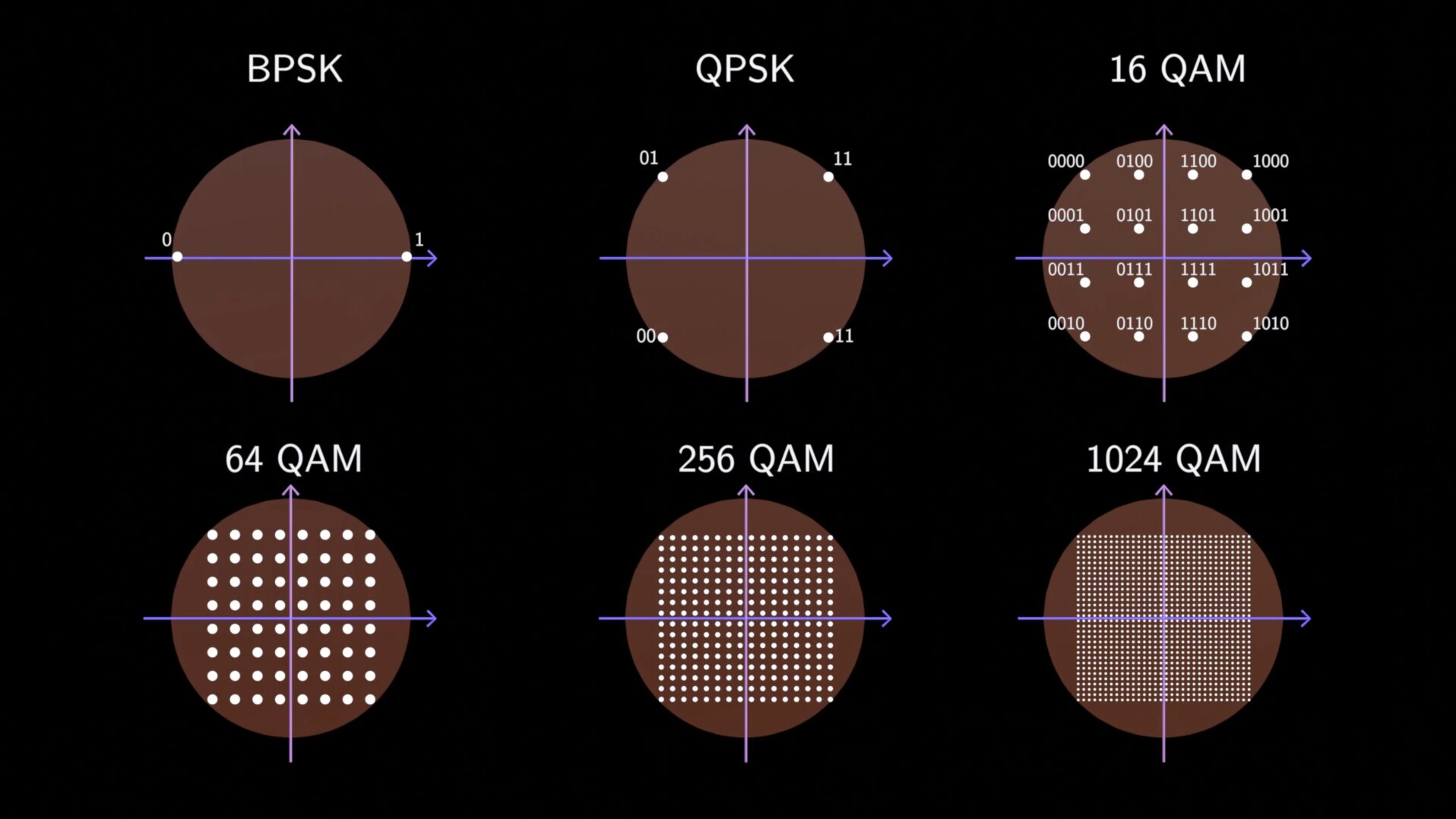
What is QAM Modulation?
QAM is the most adopted Modulation Scheme in Modern Communication Systems. In this post, we explore the basic principle of QAM and show how power constraints shape its design.
-

What is Beamforming? Aiming Radio Waves Like a Flashlight
Ever dropped two pebbles in a pond and watched the ripples? The waves meet and either grow stronger or cancel out. Beamforming works exactly the same way—just with wireless signals instead of water.
-

Channel Models in Wireless Communication: From Dream Channel to Total Mayhem
A wireless channel is the invisible path a signal travels through, from a transmitter to receiver. Discover the science behind channel models, from ideal channels to fading channels with bouncing waves and obstacles.
Intermediate:
-

OFDM: How 5G Builds Its Signal, Slice by Slice
A casual guide to the OFDM transmitter — no heavy math, plenty of springs and echoes. Watch how Wi-Fi, 4G and 5G build their signals, slice by slice.
-

What is OFDM? The Data Superhighway Explained with Trucks
OFDM is the secret highway system behind today’s lightning-fast Wi-Fi, 4G and 5G. Instead of jamming data into one narrow lane, OFDM splits it across thousands of tiny subcarrier lanes, each carrying a portion of the data in parallel.
-

What is Uplink Power Control in 5G and 4G?
Uplink Power Control adjusts your phone’s transmit power so that the base station receives signals at just the right strength. Think of it like adjusting your voice in a conversation—if you’re close, you speak softly; if you’re far away or in a noisy room, you speak louder. Let’s try to understand this concept in a simple way.
-

RACH: How Your Phone Instantly Connects to 5G
RACH (Random Access Channel) is the four-message handshake your phone uses to get a 5G tower’s attention and get online. Explained with a party analogy.
-

Cellular Communication Entities: A Tour of the Hidden City Behind Every Text
In this post I will explain the major physical entities in cellular communication, in an easy to understand way. Understanding it helps you appreciate how these systems work together to keep you connected.
Advanced:
-

DRX in 5G: How Your Phone Naps Its Way to All-Day Battery
DRX (Discontinuous Reception) lets your 5G phone sleep between check-ins and wake just in time for data. How the power nap works and why the battery lasts.
-

5G PUCCH: A Casual Guide to Your Phone’s Feedback Line
PUCCH (Physical Uplink Control Channel) is how your 5G phone talks back to the tower: got it, send again, I have data. The feedback line, explained simply.
-

Link Adaptation in 4G and 5G: Delivery Trucks for Your Data
Link adaptation is how a 4G or 5G tower resizes each data packet to fit your signal: the phone reports a CQI, the tower picks an MCS. With delivery trucks.
-

CORESET in 5G: How Your Phone Finds Its Data — a Treasure Hunt
Your phone locates PDCCH in the vast ocean of Time and Frequency using Search Space and CORESET. Welcome to the world of treasure hunt.
-
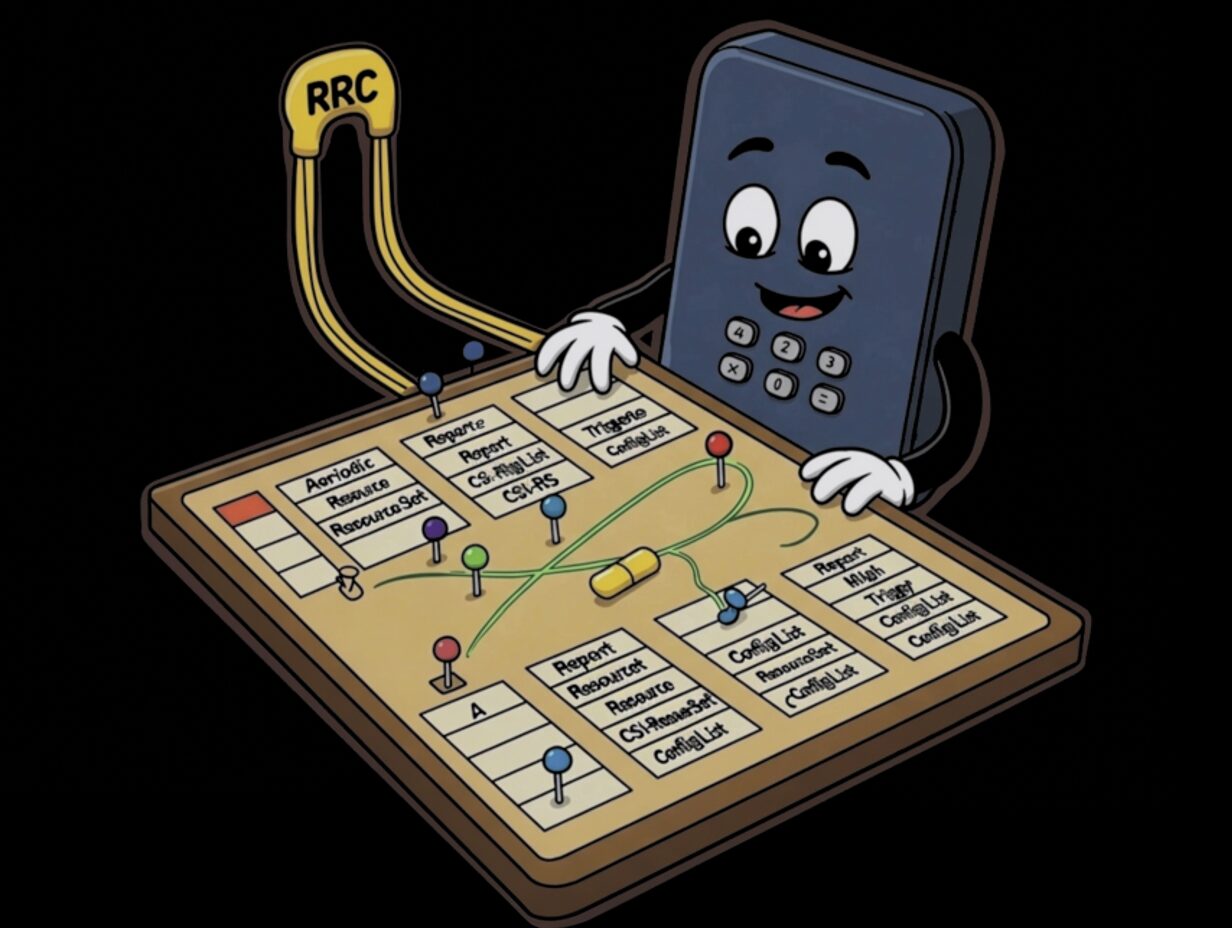
5G Timing Magic: How Your Phone Knows When to Listen for the CSI-RS Signal
Your phone needs to check CSI-RS signal regularly to keep track of the channel conditions. Just like a train schedule tells you exactly when your train arrives, a smart timing offset tells your phone when to check the CSI-RS signal. Let us explore that concept a bit.
-

Dual Connectivity in 5G: Why Two Connections Are Better Than One
Dual connectivity is a 5G feature that lets your phone connect to two cell towers at the same time. Dual connectivity makes 5G rollout smoother and easier.